
Afriston College Te Mauri
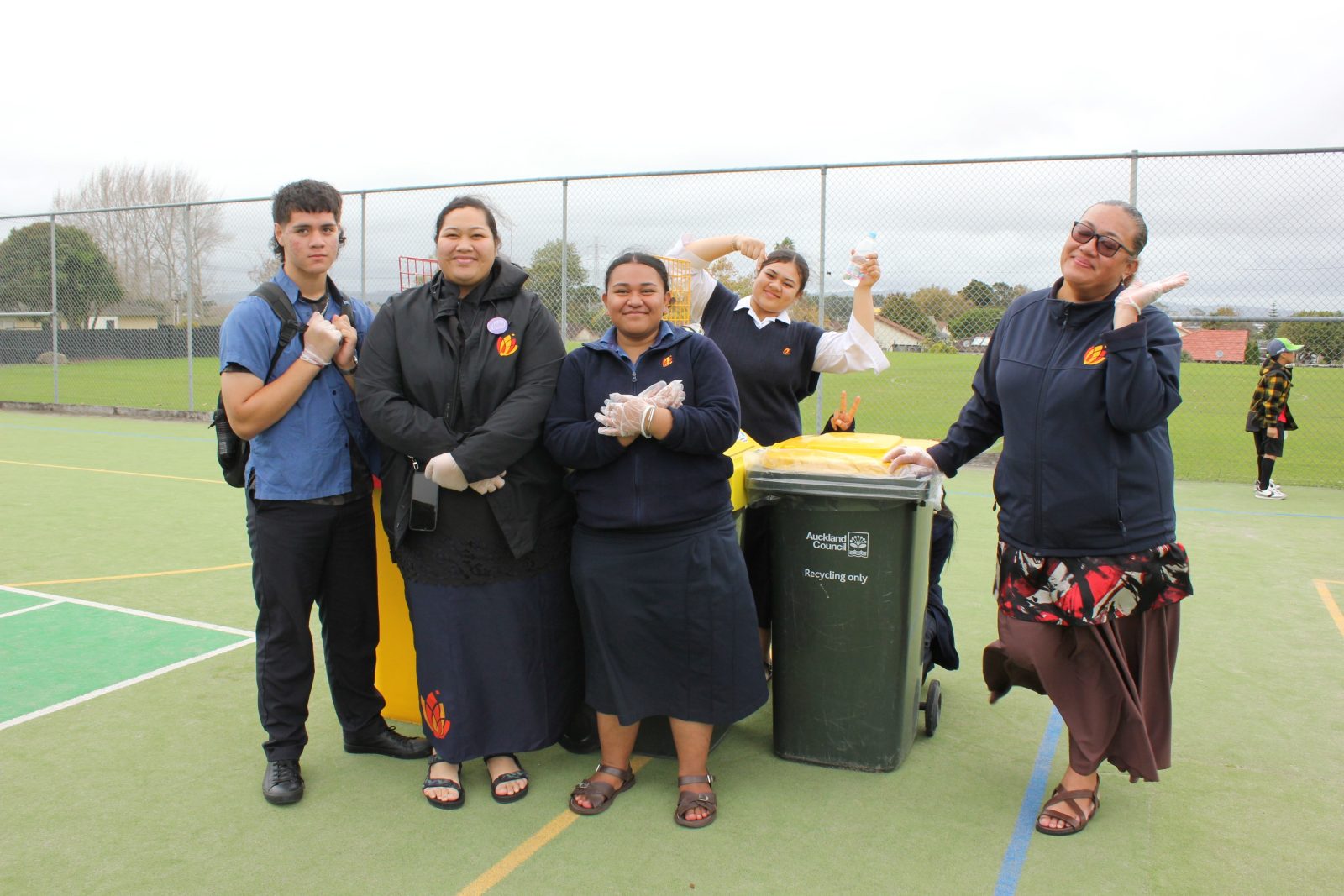
- Event Type: Multi-school kapa haka festival
- Description: Alfriston College Te Mauri 2026
- Size: 500+
- Location: Alfriston College, Auckland
- Waste Separation: Recycling, food waste, landfill, plus wash station and reusable tableware
How we did:
1 Reduce incoming waste
Reusable plates were used to avoid single-use plates. A team of student volunteers were briefed on the event’s waste diversion process to ensure communication with visitors was clear.
2 Choose the right bin
The kapa haka festival’s expected waste was mainly hāngī related; food, packaging, water bottles, and cutlery. The school chose a 3-bin system, including recycling and compost bins to divert as much waste as possible.
3 Let people know
Student volunteers were stationed at bins to help event attendees sort their waste correctly.
4 Capture feedback
The students diverted 60kg of waste from landfill, including 12kg of empty water bottles and 48kg of food scraps from landfill. 12 kilograms of bottles may not sound like a lot, but they are lightweight and would take up a lot of space in landfill. After the event, the team reflected on the importance of knowing what sort of packaging the food would be delivered in after the food was delivered in two layers of packaging that had to be separated.
The students learned information for the event that could be applied to their daily lives, such as waste separation and how to recycle correctly. Students and staff alike were positive about the litter grabbers and reusable plates and expressed interest in reusable cups or water bottles for future events too.
Key Messages:
- Clear communication is key! Once the student volunteers were across the process, they went out of their way to set up and pack down, and guide people with their waste.
- Educating people on even small habits, like separating lids from bottles before recycling, makes sustainability more accessible, one step at a time.
Key Learnings:
- In the future, the team are interested in borrowing even more resources to make their events smoother, such as aprons to protect school uniforms at wash stations, caps to identify student volunteers from event goers, and more sorting stations to reduce bottlenecking at bins.
- Positive opinions are a result of seeing impact for themselves! Once the hurdle of understanding the new zero waste process is cleared, volunteers and staff can see benefits of applying even more sustainability actions to future events.
Recent Zero Waste Events
Case Studies
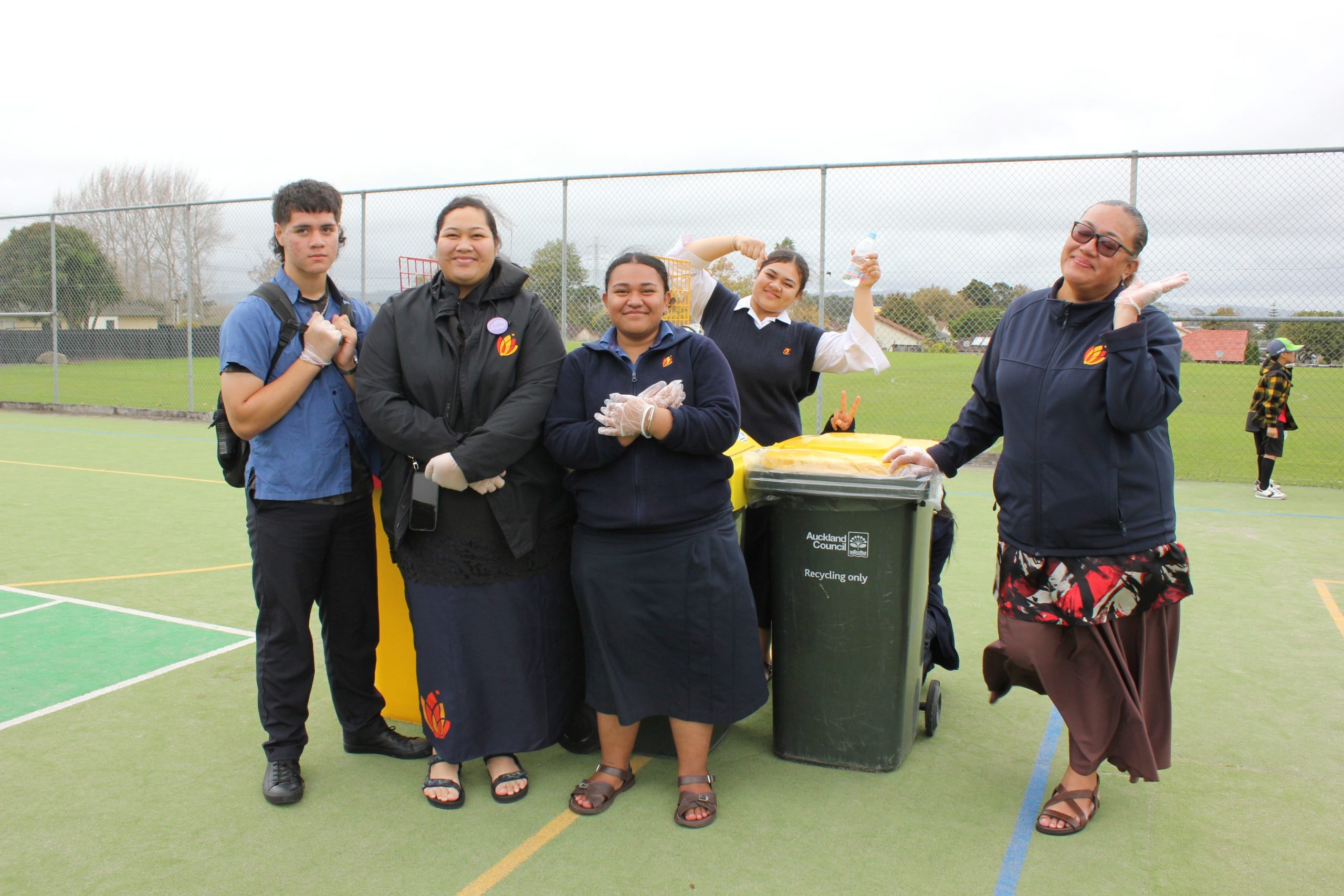
Afriston College Te Mauri
How we did: 1 Reduce incoming waste Reusable plates were used to avoid single-use plates. A team of student volunteers were briefed on the event’s waste diversion process to ensure communication with visitors was clear. 2 Choose the right bin The kapa haka festival’s expected waste was mainly hāngī related; food, packaging, water bottles, and… View Article
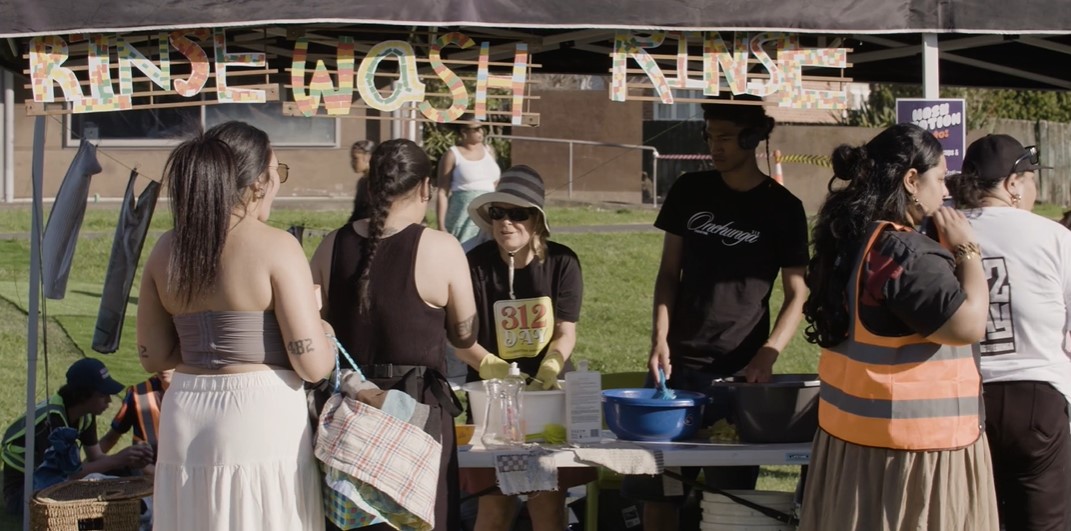
Onehunga 312 Day
Watch the following video showcasing the amazing zero waste effort of the organisers at 312 Day. The video case study, 312 Day, was created by Davian Lorson of Taking Shape.
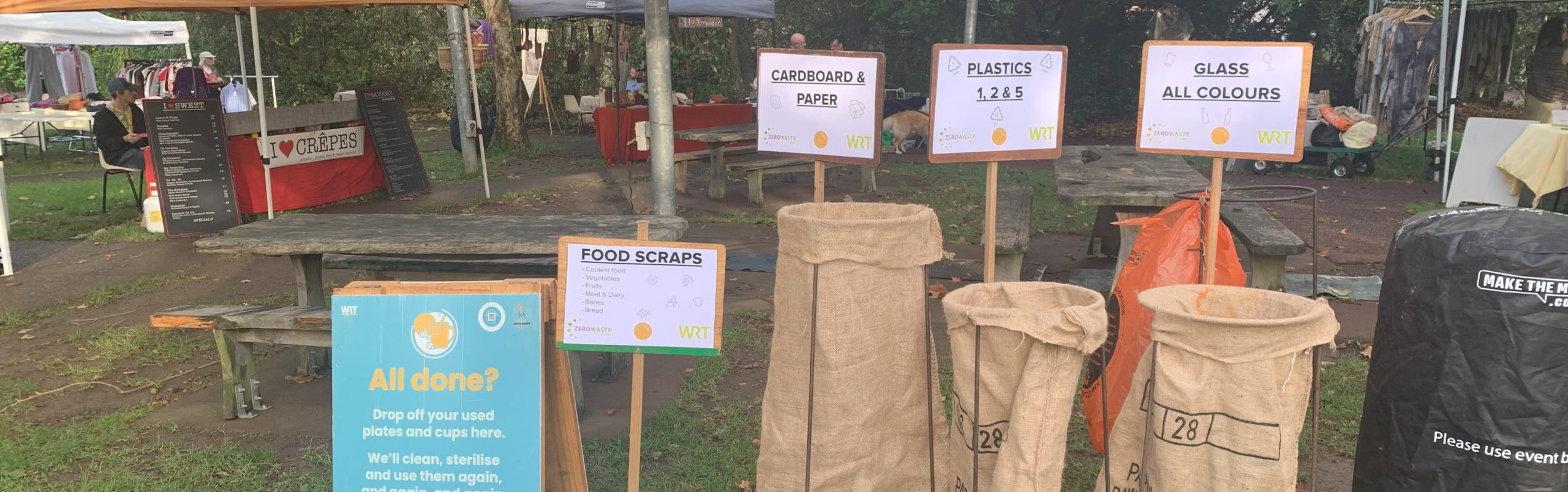
Waiheke Ostend Market 50th Anniversary
A weekly morning market, celebrating their 50th anniversary
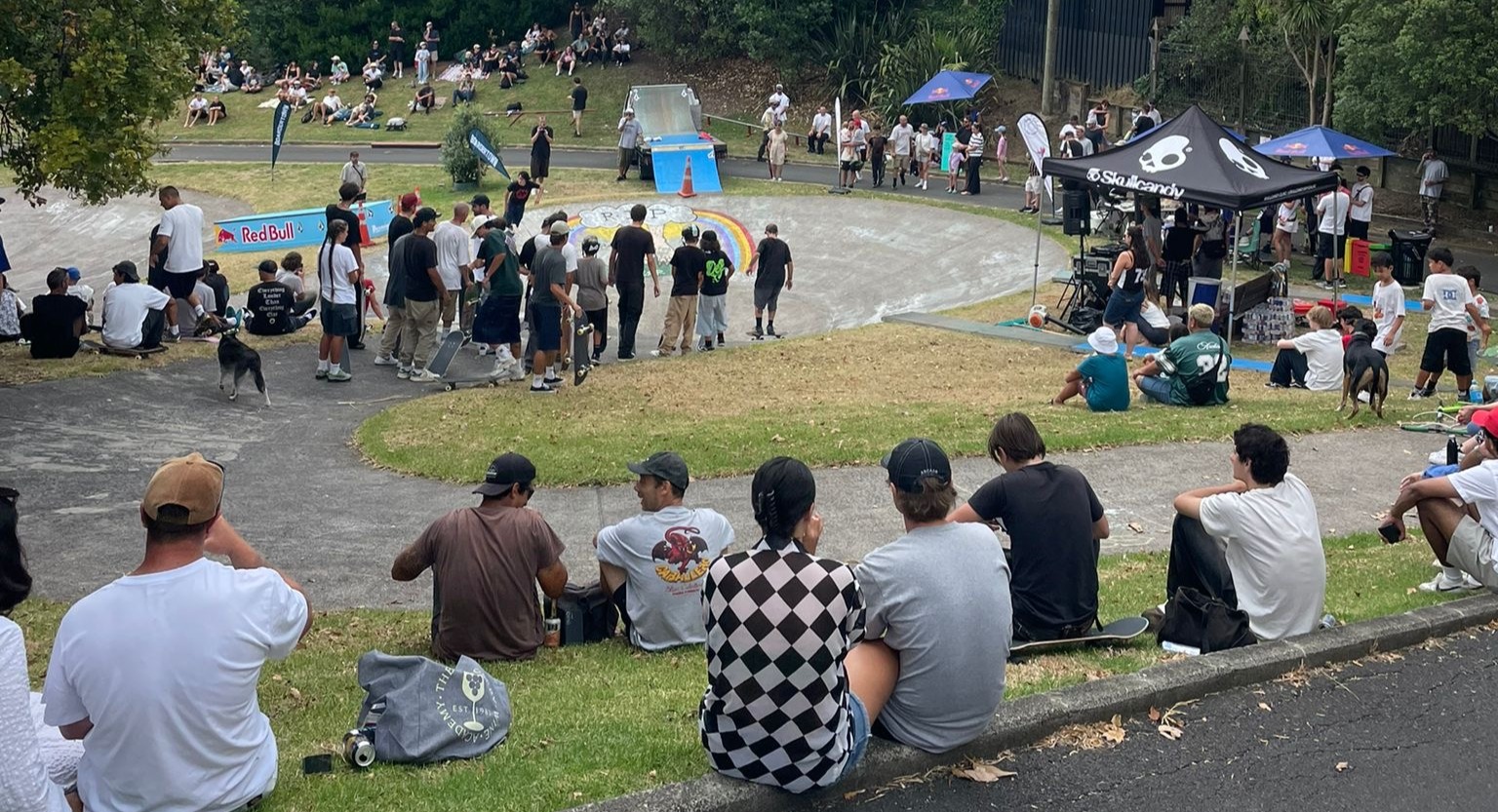
Tole Super Bowl Skate Competition
An annual competition that brings the skateboarding community together at one of New Zealand’s most iconic bowls.
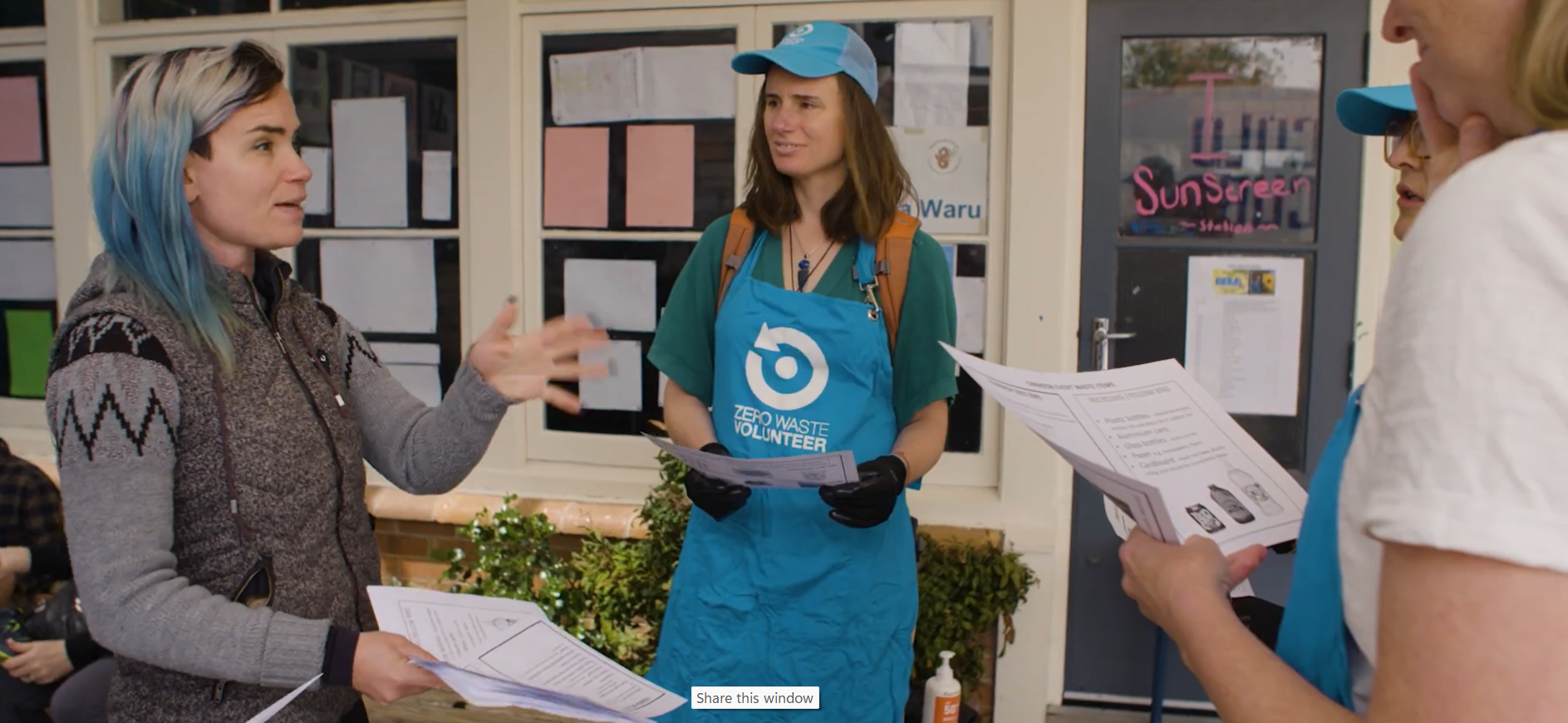
Kaurilands School Gala
The Kaurilands School community worked hard to keep 93% of waste out of landfill at their school gala.
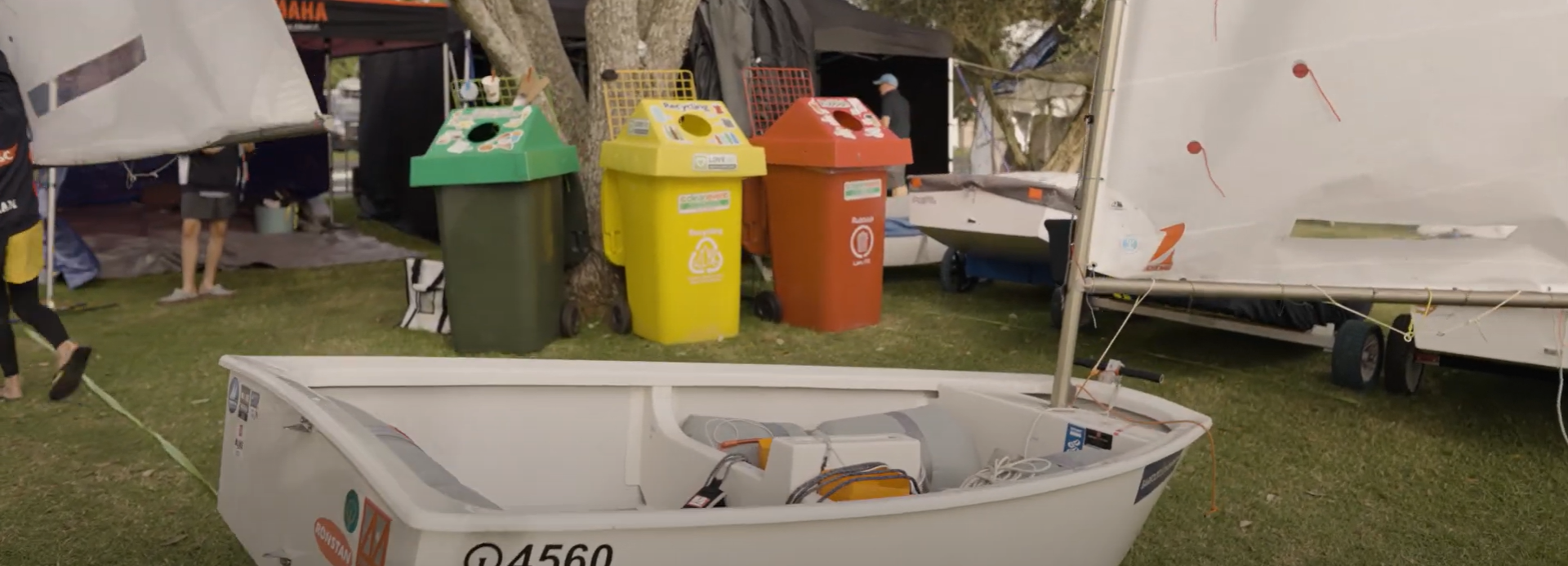
Wakatere Boating Club Regatta
Wakatere Boating Club is ensuring their events are as zero waste as possible.
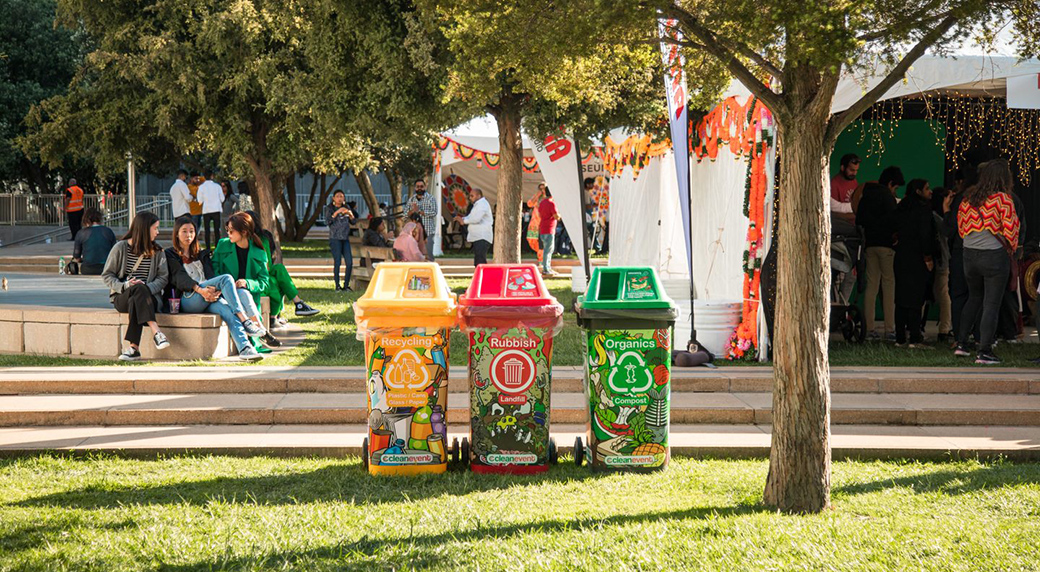
Auckland Diwali Festival
Diwali Festival is an annual, free major cultural festival with stalls and live entertainment
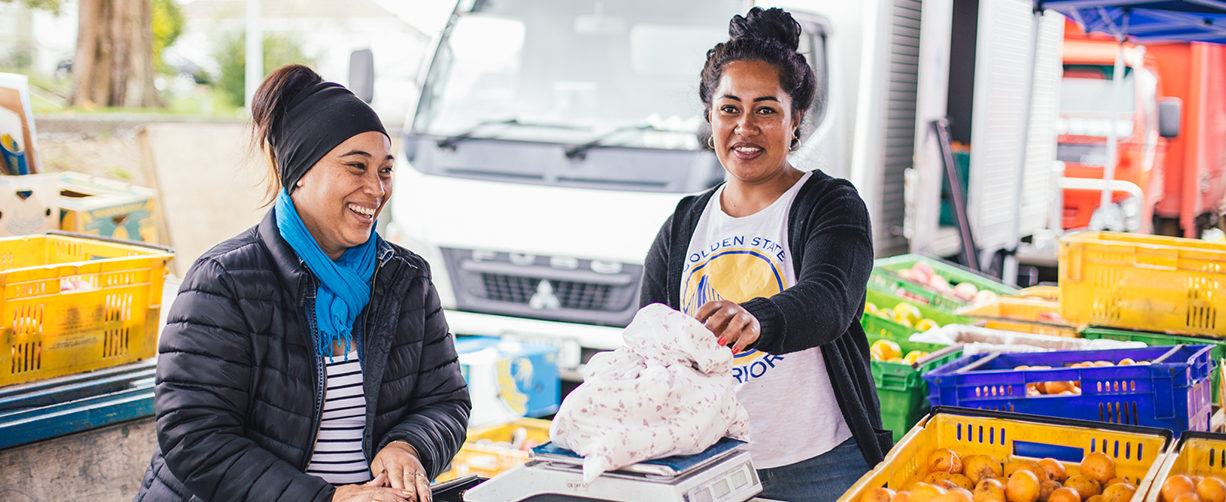
Wesley Market
A weekly community market selling fresh produce, second-hand clothing, and bric-a-brac
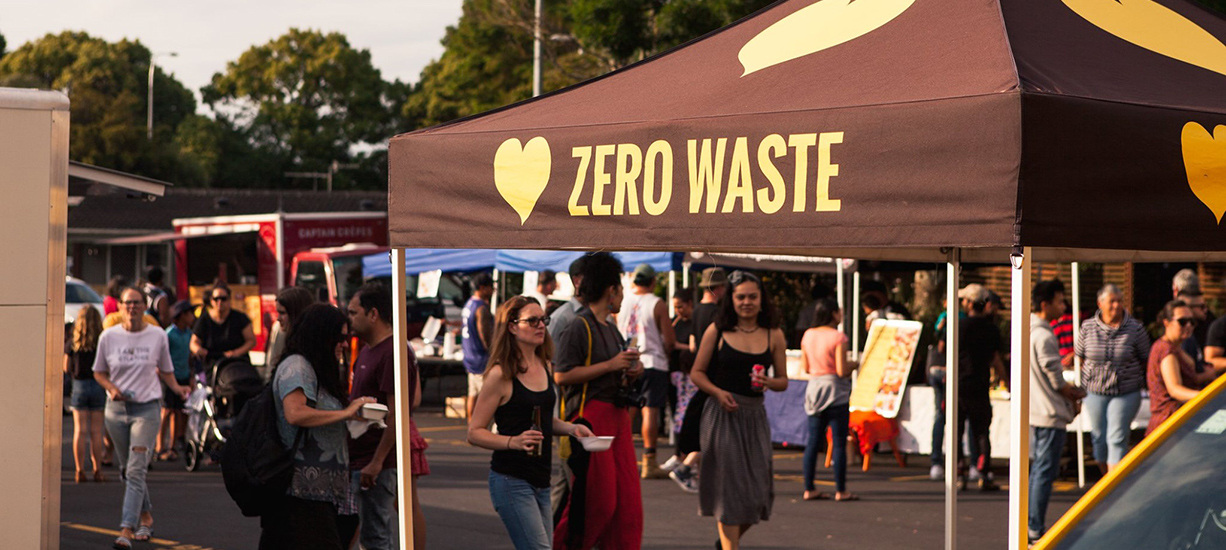
Avondale Christmas Market
Community Christmas food and stall Market at Avondale Community Centre, Avondale, Auckland
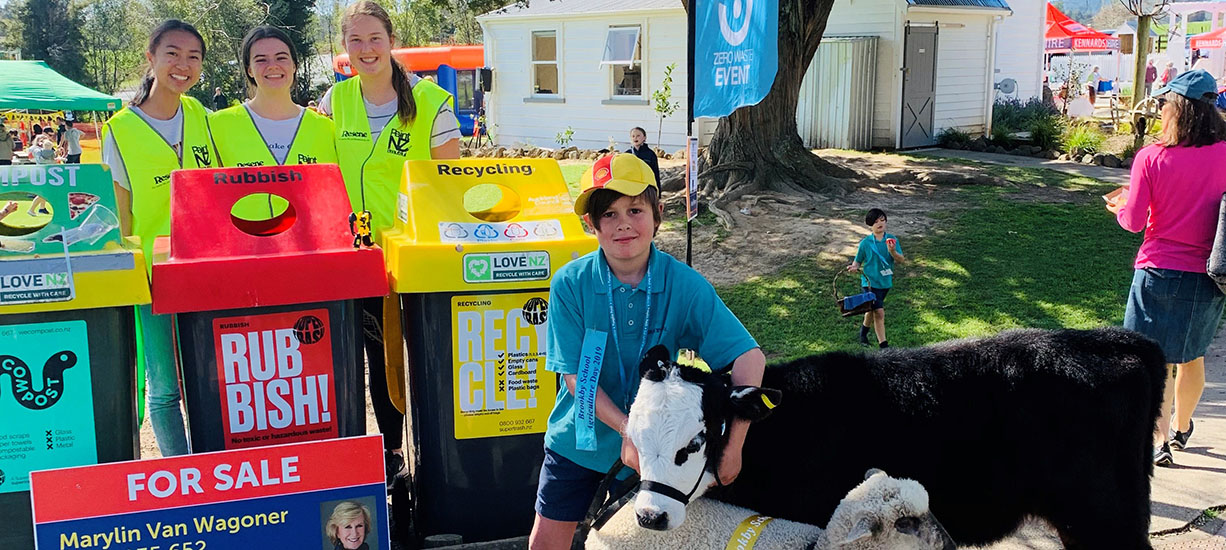
Brookby School Ag Day
Annual agricultural day for the school community with animal judging, food, stalls and entertainment. Led by the Brookby School environmental councillors.